A 4 season sunroom cost can look reasonable in a glossy estimate and surprisingly large once the project is engineered, permitted, insulated, wired, and tied into the existing house. For a homeowner preparing to sell within the next year, the important question is not whether a sunroom would be enjoyable. It is whether the work improves buyer confidence enough to justify the cash, disruption, and schedule risk.
In much of the United States, a professionally built four-season addition commonly lands somewhere between $45,000 and $120,000. A small, simple space on an accessible foundation may come in below that range, while a large room with a new slab, crawl-space work, extensive windows, HVAC changes, and premium finishes can exceed $150,000. Local labor, climate requirements, site access, and the condition of the existing wall all matter.
If this were my listing next month, I would not begin with furniture or renderings. I would first compare the addition against repairs buyers can see immediately: worn flooring, an aging roof, dated bathrooms, poor drainage, peeling exterior trim, or an old heating and cooling system.
What drives 4 season sunroom cost
The first major cost decision is whether this is a true conditioned addition or an enclosed porch marketed as a sunroom. A four-season room needs insulation in the walls and roof, energy-conscious windows, a finished ceiling, permanent heating and cooling, electrical work, and a foundation that meets local requirements. That is much closer to adding living space than installing a screened porch.
A basic 12-by-12 room might require $8,000 to $20,000 for foundation and site preparation, $15,000 to $35,000 for framing, roofing, windows, and exterior work, and another $10,000 to $25,000 for mechanical, electrical, drywall, flooring, and trim. Design fees, permits, engineering, demolition, landscaping repairs, and a contingency can add several thousand dollars.
Window selection changes both the price and the comfort level. A wall of standard vinyl windows is generally less expensive than oversized units, specialty shapes, or folding glass doors. Low-emissivity glass can help with solar heat and winter comfort, but more glass is not automatically better for resale. Buyers also notice glare, hot afternoons, difficult shades, and furniture that fades near unprotected windows.

Is the project a good pre-sale investment?
A new sunroom can photograph well and give a listing an attractive lifestyle feature. It may help a house stand out when competing homes have ordinary patios or unfinished porches. However, resale value is not the same as construction cost. Appraisers and buyers generally look at comparable homes, usable square footage, quality, permits, and how naturally the space connects to the house.
That creates a simple risk. Spending $90,000 does not guarantee a $90,000 increase in market value. In some neighborhoods, buyers might appreciate the room but still price the property based on the local ceiling for similar homes. In others, an addition that feels like an afterthought can raise questions about leaks, heating bills, maintenance, and whether the work was done correctly.
The 4 season sunroom cost makes more sense before listing when the home already has a solid roof, clean exterior, updated primary systems, and a shortage of usable living space compared with nearby listings. It makes less sense when the kitchen is visibly dated, the bathrooms need work, or the house has deferred maintenance that will appear on inspection.
Buyer confidence matters before buyer compliments. A purchaser may say, “This room is beautiful,” while mentally subtracting money for an old roof and questionable windows. The question is whether the addition solves a market weakness or simply adds an expensive talking point.
Compare the budget with smaller projects
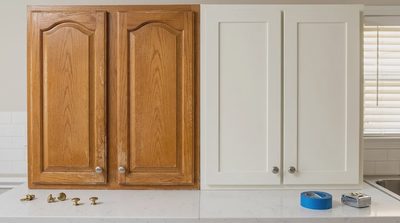
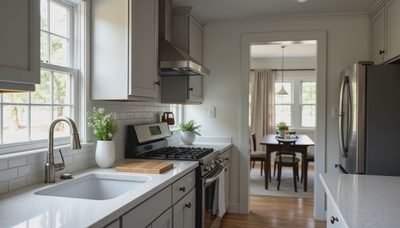
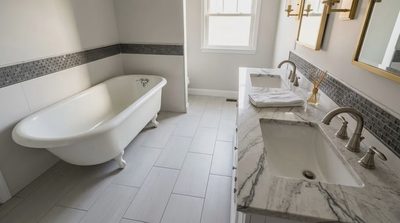
Suppose a homeowner has $60,000 available before listing. A modest 4 season sunroom cost could consume nearly all of it. The alternative might include $12,000 to $20,000 for durable flooring throughout the main level, $8,000 to $15,000 for a controlled kitchen refresh, $6,000 to $12,000 for a bathroom update, and $5,000 to $10,000 for exterior repairs, paint, gutters, and landscaping cleanup.
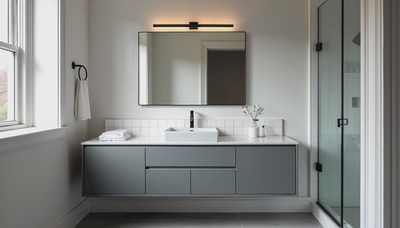
Those projects are not as dramatic, but they improve more rooms and reduce the number of objections during showings. Neutral LVP or refinished hardwood can make a tired house feel maintained. Replacing a cracked vanity, dated mirror, and harsh light fixture can help a bathroom read as clean without moving plumbing. Correcting loose siding or overflowing gutters protects the buyer’s inspection experience.
A seller should also account for time. A sunroom can take several months once design, permitting, material ordering, construction, inspections, and final corrections are included. A flooring and paint package may be completed in a few weeks. If the listing deadline is six months away, schedule certainty has real financial value.
Contractor questions that protect the budget
Get at least three written proposals, but compare scopes rather than totals alone. One contractor may include the foundation, insulation, permits, HVAC extension, and final paint while another lists only framing and windows. Ask each bidder to identify exclusions, allowances, payment milestones, warranty terms, and the process for change orders.
For a 4 season sunroom cost estimate, ask these specific questions:
- Is the room classified as conditioned living space under local code?
- What foundation and drainage work are included?
- How will the new roof and wall connect to the existing structure?
- What insulation values, window specifications, and air-sealing steps are planned?
- Can the current HVAC system handle the added load, or is a separate mini-split needed?
- Who obtains permits and schedules inspections?
- What happens if excavation reveals poor soil, an old foundation, or buried utilities?
- How much cash should remain for a realistic contingency?
A low bid that excludes grading, electrical upgrades, or finish repairs is not a bargain. It is an incomplete number. I would rather see a clear $78,000 proposal than a vague $58,000 estimate that becomes $85,000 through change orders.

When a three-season room or patio is smarter
If the goal is buyer appeal rather than year-round family use, a three-season enclosure may provide some of the visual benefit at a lower price. It generally has less insulation and simpler heating requirements, so the 4 season sunroom cost comparison can show a meaningful difference. A well-built covered patio, new pavers, fresh landscaping, and outdoor lighting may also create a strong first impression without changing the home’s conditioned square footage.
These options are not substitutes in every climate. A buyer in a cold northern market may value insulated living space, while a buyer in a warm region may care more about shade, airflow, and a usable connection to the yard. The local comparable sales should guide the decision. Visit competing listings and note what buyers are actually seeing, not what renovation advertisements suggest they want.
If the existing porch is structurally sound, repairing its roof, replacing damaged screens, adding a ceiling fan, and improving the transition from the kitchen may be enough. Spend $10,000 to $25,000 on a coherent outdoor upgrade rather than forcing a full addition into a neighborhood where it will not be fully rewarded.
My pre-listing decision test
I would approve a four-season addition only after answering four questions. First, can the project be completed at least six to eight weeks before listing, leaving room for corrections? Second, does the proposed 4 season sunroom cost fit comfortably after roof, HVAC, bath, kitchen, and exterior priorities are handled? Third, will the finished space look original to the house rather than bolted on? Fourth, do recent nearby sales support the added size and quality?
If the answer to two or more questions is no, I would redirect the money. Repair the visible defects, simplify the finishes, and make the existing rooms feel brighter and better maintained. Buyers often pay more readily for a house that feels cared for than for one impressive addition surrounded by unfinished work.
A sunroom can be a sensible long-term improvement when your family will use it for years. That is a different calculation from a pre-sale renovation. Don’t renovate for applause. Renovate for the next offer.