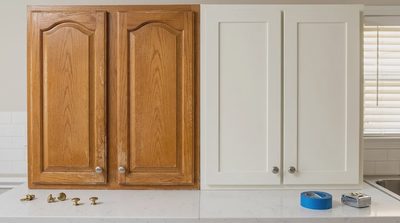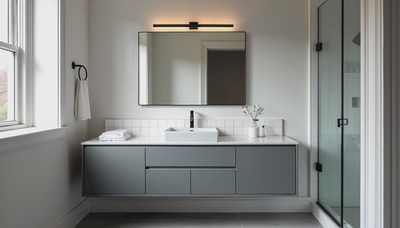
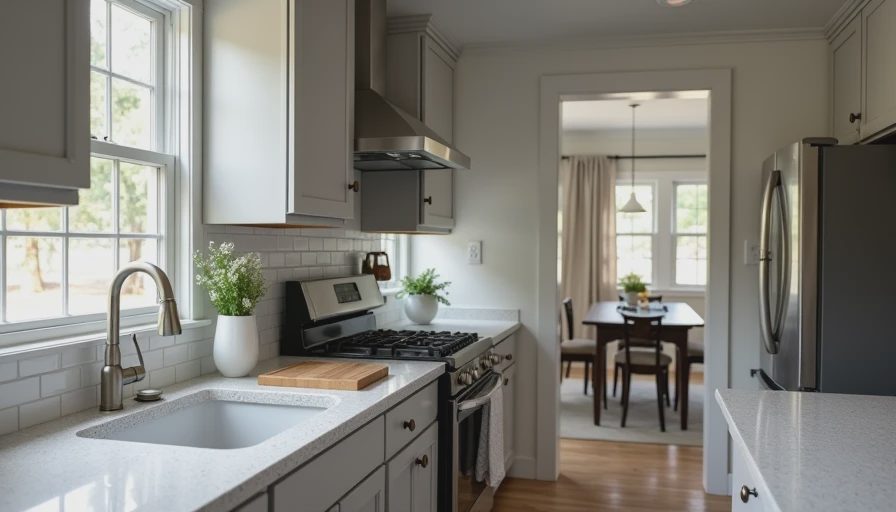
When a Charlotte homeowner asks me about a kitchen remodel before selling house, I don't start with cabinets or appliances. I start with the thirty seconds buyers spend forming a first opinion of the room. Buyers rarely open drawers or test the faucet before they decide whether the kitchen reads clean, modern, and current. A kitchen remodel before selling house is a persuasion problem, not a construction problem. Hit the perception points and the whole tour runs on buyer confidence. Miss them, and no amount of hidden quality rescues the impression.
That framing comes from eight years of running renovation projects—coordinating crews, reviewing bids, and scoping the work—before I moved into pre-sale renovation advising here in Charlotte. The longer I sit across from sellers, the clearer one pattern becomes: homeowners price what they built, and buyers price what they see. Those two numbers rarely match. My job is to close the gap by spending where buyers actually look.
I keep three rules on every walkthrough. First, midrange wins for resale because it sits above builder-grade without drifting into luxury territory. Second, perception beats specifications—unified hardware reads better than a premium oven sitting among mismatched metals. Third, don't renovate for applause. Renovate for the next offer.
Why Midrange Is the Pre-Sale Sweet Spot
Midrange is where resale value and buyer enthusiasm actually overlap. Above builder-grade, the room finally looks intentional. Below the luxury line, the price stays inside what a typical buyer in this market will pay. When I talk about home improvement roi for resale, midrange kitchen work is the category I point to first, because it moves perception without moving the price tag into another bracket.
Most sellers in our area ask me whether a kitchen remodel before selling house is worth it at all, and the answer depends on the band you choose. In our neighborhood north of Charlotte—the kind of mid-market subdivision where Noah rides his bike after school and Sophia runs between driveways with the neighbor kids—most kitchens went in the same decade, and they all hit the market looking tired in the same way. That sameness is an opportunity. The buyer touring your house has already walked three kitchens with laminate counters and brass knobs. Yours just needs to read different, cleaner, and more current than those.
Here's the tier breakdown I walk sellers through, using ranges I see regularly in the Charlotte market:
Upgrade Tier | Typical Spend | What Buyers Notice | What Buyers Don't Pay For |
|---|---|---|---|
Builder-Grade Refresh | 1,500 | Fresh hardware, new faucet, painted trim | Cabinets that still read dated |
Midrange Update | 9,000 | Countertops, backsplash, lighting, unified metals | Component brand names |
Luxury Install | $25,000 and up | A striking range, a waterfall island | The full premium on custom work |
The middle row is where a kitchen remodel before selling house earns its keep. That spend lands entirely inside what buyers feel, with nothing left over for details they can't register in a quick tour.
The Perception Points That Decide the First 30 Seconds
Buyers read a kitchen in a consistent order: countertop first, backsplash second, hardware and faucet third, lighting fourth, appliance faces last. Spending along that order is how a limited budget outperforms a scattered one. It's also why a kitchen remodel before selling house doesn't need to touch every surface to change the offer.
Countertops: Material and Edge Read First
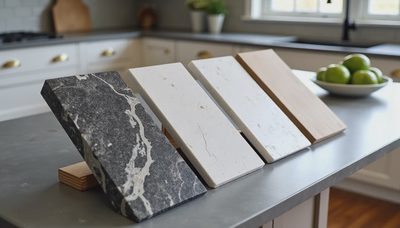
The counter is the largest single surface in the room, so it carries the most perception weight. When a kitchen remodel before selling house leads with the countertop, buyers notice before they say a word. In the midrange band, quartz or solid-surface reads modern and low-maintenance—exactly what this buyer wants. Skip the exotic stone and skip the ornate edge profiles; a simple eased or beveled edge reads clean and dates far less than a complicated Ogee. Budget 6,000 for a mid-size kitchen including materials and labor, and tell the fabricator you want the mid slab grade. The upgrade grades don't photograph any differently.
Backsplash: Clean and Current Beats Busy
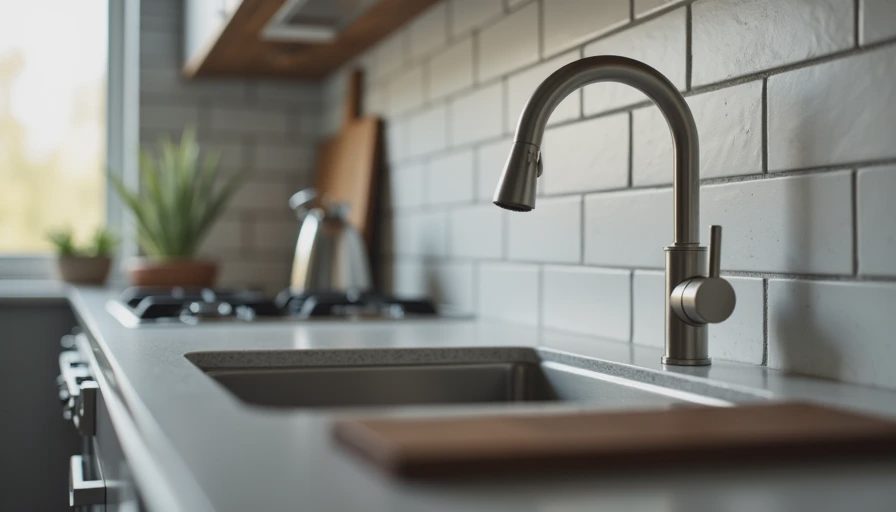
A backsplash is a cleanliness signal, not a decoration. White subway tile in a simple running pattern quietly reads timeless and tells buyers this kitchen has been cared for. Busy mosaics and dark glass panels force buyers to judge your taste instead of the room's condition, and taste is a risk they price in. Keep grout lines tight and consistent—buyers notice grout before they notice tile.
Hardware: Uniformity Is the Silent Signal
Buyers rarely name hardware as a deciding factor, but they feel it. Matching knobs and pulls across every door and drawer signal that the kitchen was maintained as a whole. Mixed finishes or worn brass next to new chrome reads as neglect. A complete swap costs a few hundred dollars and takes an afternoon. It may be the fastest perception win in the room.
Faucet and Sink: The Touch Test
Buyers touch the faucet before they ask a single question. A solid modern faucet with a clean spray head and no wobble tells the hand what the eye already suspects: this kitchen works. Pair it with a stainless or composite sink that's free of deep scratches. Allow 700 for the pair in the midrange, and have a plumber confirm the mounting is tight before the first showing. A loose faucet is a silent red flag.
Under-Cabinet Lighting: The Cheap Trick That Changes the Room
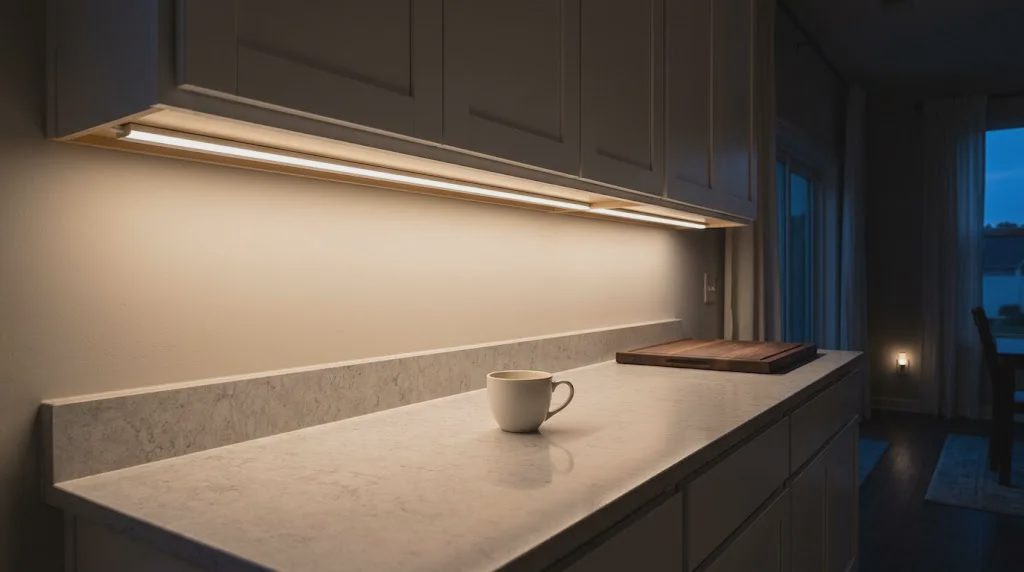
Of everything on this list, under-cabinet lighting delivers the most response per dollar. Warm LED strips under the upper cabinets make the countertop glow, kill the work-surface shadows, and make the kitchen feel staged even at six in the evening. Buyers notice the effect but can't explain it—they just feel the room is nicer. Install runs 500 depending on run length, and it photographs better than any single appliance upgrade.
Appliance Panels: Match the Metal, Then Stop
Mixed stainless, black, and white faces wreck the perception of a carefully updated kitchen. Match the metal across the visible lineup—even if that means one clean used replacement—and then stop. Buyers in this band don't pay a premium for a high-end range over a tidy midrange one. The uniformity does more work than the brand.
Where Midrange Money Gets Felt—and Where It Gets Buried
Not every dollar a seller spends moves the sale, and knowing the split is the whole discipline of pre-sale work. In practical terms, a kitchen remodel before selling house rewards the visible rows, not the expensive ones. Here's how I divide the typical midrange budget between moves that buyers feel and moves that stay buried in the build:
Investment | Typical Cost | Buyer Perception |
|---|---|---|
Countertop replacement | 6,000 | High—largest surface, touched daily |
Backsplash refresh | 2,500 | High—reads clean and current |
Unified hardware and faucet | 800 | High—consistency signals care |
Under-cabinet lighting | 500 | High—transforms the room after dark |
Custom island design | 12,000 | Low—buyers price the room, not the carpentry |
High-end appliance set | 15,000 | Low—doesn't justify the premium at this price point |
The low rows are where sellers lose money. A custom island is a pleasure to live with and a weak thing to sell. High-end appliances read as someone else's expense. Home improvement roi for resale behaves the same way across categories: money spent on visible, touchable surfaces returns more than money spent on brand and craft that a thirty-second tour can't register.
Keep these guardrails in mind before you write a single purchase order. A kitchen remodel before selling house goes right when every line item answers one question: does the buyer feel it?
Don't customize for your taste. A kitchen remodel before selling house should read neutral, not opinionated.
Don't chase appliance brands. Buyers at this price point want the room to look whole, not the range to look expensive.
Don't gut structurally sound cabinets. A paint-and-hardware refresh captures most of the perceived gain at a fraction of the cost.
Do get three bids and compare scope, not price. A low number usually means missing line items, and change orders on a listing clock eat your timeline.
Do finish trim and caulk before photos. Photography amplifies every perception point, including the ones you forgot.
The Order I'd Spend In
When sellers push for a direct answer, I give them the same one I'd give myself next month. The shortest version of a kitchen remodel before selling house comes down to a single order. If this were my listing, here's where I'd spend first: countertop, then backsplash, then under-cabinet lighting, then hardware and faucet, then appliance face alignment. That order lands around 9,000 in most Charlotte kitchens and touches every point a buyer feels in the first thirty seconds.
Two closing notes from the field. First, resist upgrade creep once the first bid arrives; every add-on that costs more than it returns is a kitchen remodel before selling house done backwards. Second, keep receipts and scope documents organized for the disclosure packet—buyers in this market ask what was done, and a clean paper trail builds the same confidence as a clean countertop.
Lauren has told me more than once that I price fixtures like a contractor instead of someone who actually cooks. She's right, and that's the point. You aren't renovating a kitchen for the family that lives there anymore. You're dressing a room for a stranger who decides on it in thirty seconds. The question isn't whether it's nicer. The question is whether it helps the sale.