When a Charlotte seller sits down with me about their master bath, the conversation usually opens with a Pinterest board and a big number. They have watched hours of renovation content, and they are ready to spend real money on bathroom updates before selling. I spent eight years managing residential projects in this area — coordinating crews, reviewing bids, scoping work before the first hammer swings. Now I advise sellers on what actually moves an offer. My job is translating contractor talk into homeowner math. This article is that translation: a list of bathroom upgrades I keep talking sellers out of, and the reasoning behind every one.
Here is the pattern I see in most homes I review. Sellers budget 25,000 for the master bath, assume a nicer room equals a bigger check, and only start asking questions once the work is priced. The gap between what sellers expect and what buyers pay is exactly where bathroom updates before selling go wrong. Let me show you why.
The Neighborhood Price Ceiling Decides Everything
Buyers do not pay for a bathroom in a vacuum — they pay relative to the four other listings they saw that same afternoon. That relative number is set by your street, not by your fixtures.
A house in the 390,000 band in Huntersville or Matthews does not jump to 30,000 of work. It stops at the neighborhood benchmark, because appraisers pull comps and buyers filter by their own budget. Every dollar above that ceiling is a dollar with no buyer behind it. This is the ceiling that bathroom updates before selling run into first, and it is the reason most of the waste below exists.
There is a second reason sellers overshoot, and it is personal. The buyer pool for your price band is not browsing designer magazines. They are raising kids, checking school zones, and quietly calculating what the bathroom will cost to maintain. My family lives in a typical mid-market subdivision north of Charlotte — my wife Lauren and I have an 11-year-old son, Noah, and an 8-year-old daughter, Sophia — and I frame every recommendation the same way I would frame bathroom updates before selling for my own listing: what would a buyer like us actually pay for this?
The maintenance reality shows up in buyer behavior more than in any survey. The moment a buyer sees a feature that looks expensive to clean or risky to repair, they discount the whole room. Jet tubs with hidden plumbing, stone that needs sealing, glass walls that film up — each one quietly lowers what they are willing to offer, because the feature reads as a future expense, not a luxury.
The Waste List: What Sellers Buy and Buyers Ignore
Every upgrade on this list fails the same test: it makes the room nicer, but it does not help the sale. I have walked sellers through each of these while planning bathroom updates before selling, and the pattern repeats every time — the seller loves the feature, and the buyers who come through never mention it.
Freestanding Tubs and Spa Jets
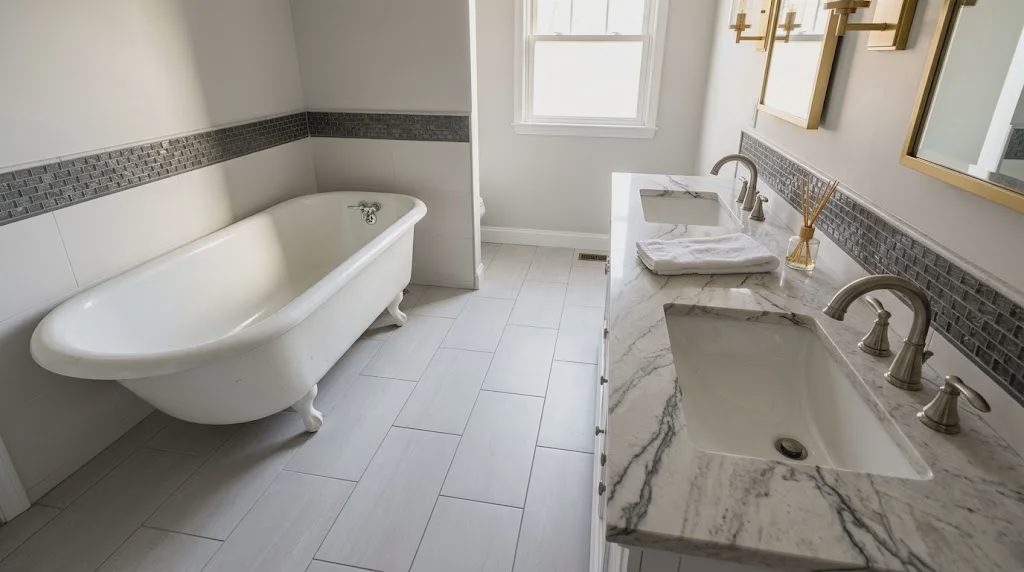
The freestanding tub is the most photographed fixture in a staged bathroom, which is why sellers reach for it first when they plan bathroom updates before selling. It reads as calm, and sellers picture it in the listing photo. Buyers in a mid-market home see something different: extra cleaning, jet maintenance, and floor space that does not earn its keep. Parents with young kids — the exact buyers for this price band — do not soak in jets; they clean them. At 9,000 installed, that tub might add $2,000 to your offer on a good day, and that math works against you once you sit on the wrong side of the ceiling.
Heated Floors
Warm tile on a January morning feels genuinely luxurious. It also adds an electric bill and a repair risk buried under the tile — and if the system fails, it is not a quick fix, it is a floor job. In Charlotte's climate, buyers weigh that risk against the feature and usually take the cash instead. I have yet to see a heated floor move an offer in this market, which is why I cross it off the sheet when sellers ask.
Stone That Outruns the Street
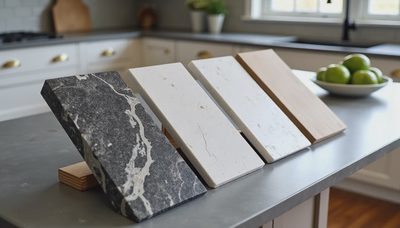
Natural stone photographs beautifully, and sellers assume it reads as a custom-home upgrade. The market around your house sets the expected finish level, not the stone yard. In most mid-market Charlotte subdivisions, a clean quartz top at 75 per square foot installed is the going rate. A marble slab at twice that does not reset the neighborhood benchmark — it just looks expensive to maintain, because stone needs sealing and the right cleaners. Buyers read that as work, and work gets priced in as a discount.
Dual Showers and Rain Heads
Two shower heads sound like a daily upgrade for a couple. The plumbing work raises the bid, and two heads can drop water pressure in a house with older supply lines. A rain head sounds nice until a buyer realizes it runs at reduced pressure and may demand a larger water heater. Buyers want a shower that works with the house, not one that invites a bigger utility bill.
Custom Vanities and Mosaic Overlays
Custom means the seller's taste is now locked into the house, and buyers do not want to inherit someone else's design. A bold accent wall or a mosaic inlay behind the faucet narrows the buyer pool, while standard sizing and neutral finishes widen it. When I see a 380,000 house, I see $4,000 of it sitting on the wrong side of the neighborhood ceiling.
Where the Same Money Works Harder
The fix is not to spend less on the bathroom — it is to spend where the next buyer sees function instead of decoration. Here is the same budget mapped to upgrades that carry more weight on offer day:
Money-Loser | Typical Spend | Smarter Use of the Same Money |
|---|---|---|
Freestanding tub and jets | 9,000 | New fixtures, a framed-glass walk-in shower, updated lighting |
Heated floor system | 6,000 | Fresh tile floor with re-grout, plus a quiet exhaust or window vent |
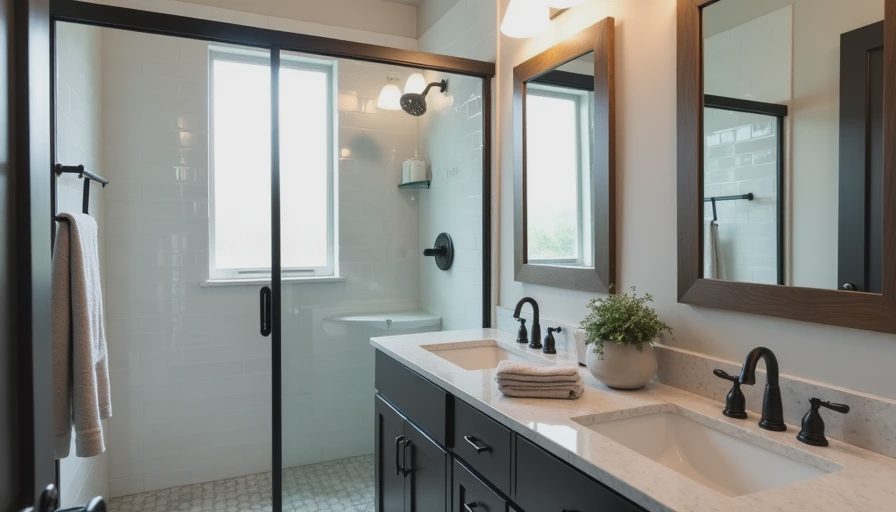
Natural stone counters | 14,000 | Clean quartz at the neighborhood base, new sink, brushed-nickel faucet |
Dual heads and rain system | 5,500 | One pressure-balanced valve, a handheld head, and a supply-line check |
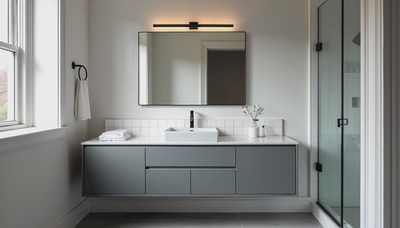
Custom vanity and mosaic | 7,000 | Standard-width vanity, new mirrors, and two-sconce vanity lighting |
The same rule applies to every line item in bathroom updates before selling: money spent on function has a buyer, and money spent on decoration has an admirer. That distinction is what separates a smart pre-sale spend from a donation to the next homeowner. In practice, this is value add remodeling before listing — you are engineering the offer, not decorating for the camera.
Three Questions Every Upgrade Has to Answer
I run these three checks on every bid I review, because they separate useful bathroom updates before selling from expensive decorations. Before any line item makes the list, ask:
Would the average buyer in this neighborhood expect this feature in this house?
Does it reduce a maintenance worry, or add one?
Will it read clearly in the listing photos and at the open house?
If an item fails one of the three, it is decoration, and decoration does not move offers.
The Decision Rule I Use on Every Listing
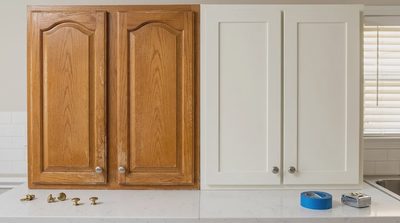
If this were my listing, here's where I'd spend first — and none of it is glamorous. When I am scoping bathroom updates before selling, I start with the details that build buyer confidence: clean re-grout, new caulk, fresh faucets, bright mirrors with proper vanity lighting, and a floor that looks new. Those features read as "cared for," and a cared-for bathroom outsells an impressive one.
Here is the order I work through when the budget is tight:
Re-grout and reseal the tile; replace worn caulk around tub and sink
Swap faucets, drains, and towel bars to brushed nickel in standard sizes
Replace mirrors and add strip or sconce lighting at a clean, neutral color temperature
Lay new tile or a quality vinyl floor if the current one looks tired
Fix any shower valve, toilet, or vent issues before the inspection
Each of these costs hundreds, not thousands, and together they do what a full remodel does for buyer confidence. That, in its plainest form, is value add remodeling before listing. The point of bathroom updates before selling is not to build the room you would want to live in — it is to build the room your buyer's spreadsheet will accept. Don't renovate for applause. Renovate for the next offer.
The buyers who write the winning offer are comparing you to three other houses, not to a magazine. Spend like you know that, and the return follows.