
The cost of outdoor kitchen work can range from a modest patio upgrade to a major construction project. For homeowners preparing to sell within the next 6 to 18 months, the important question is not whether an outdoor kitchen looks impressive. It is whether the improvement helps the home show better, supports the asking price, and gives buyers confidence that they will not inherit maintenance problems.
In most suburban markets, a basic outdoor cooking area costs roughly $5,000 to $12,000. A mid-range project with permanent counters, a built-in grill, utility connections, lighting, and storage often lands between $15,000 and $35,000. High-end installations with masonry, custom cabinetry, a roof structure, refrigeration, and new electrical or gas lines can exceed $50,000 quickly.
Before approving a design, compare that spending with improvements buyers notice immediately, such as worn flooring, dated bathrooms, peeling exterior paint, or an aging roof. Don’t renovate for applause. Renovate for the next offer.
What drives the cost of outdoor kitchen projects
The largest variable is whether you are adding a simple cooking station or building a permanent outdoor room. A freestanding grill on a small paver pad might cost $3,000 to $8,000, including basic preparation. A built-in grill with stone veneer, concrete counters, drawers, and a sink requires more labor and usually needs a stronger foundation.
Utilities also change the budget. Running a short natural-gas line may be manageable, while trenching across a yard for gas, water, drainage, and electrical service can add several thousand dollars. Local permits, inspections, and licensed trade work matter too. A contractor who gives a low price without discussing these items may not be offering a complete scope.
Countertop material creates another price gap. Basic concrete or tile can keep costs controlled, while granite, porcelain slabs, or weather-rated specialty surfaces raise both material and installation charges. Cabinet boxes need to withstand sun, moisture, and temperature swings, so standard indoor cabinets are usually a false economy.
If this were my listing, I would ask for every cost to be shown as a separate line item before discussing finishes.
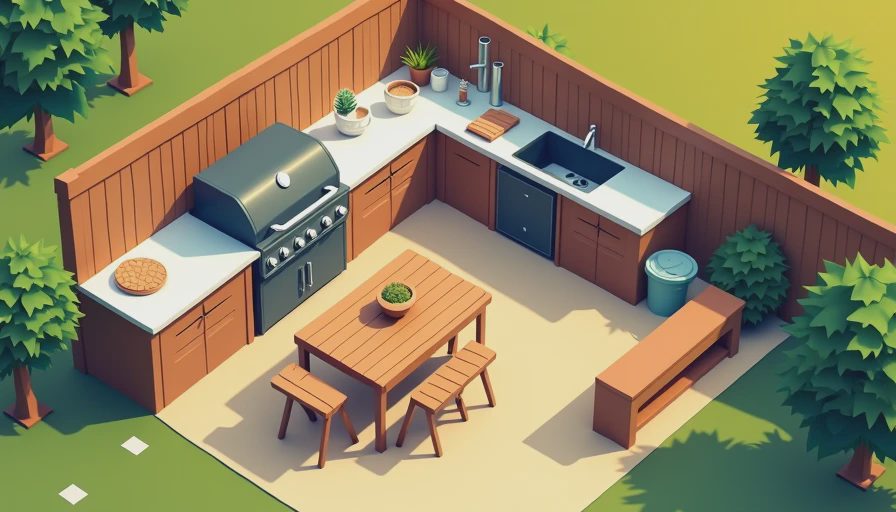
A realistic budget by project level
A starter outdoor kitchen generally includes a grill, a small landing counter, weather-resistant storage, and a finished surface beneath it. At approximately $5,000 to $12,000, this scope can make a plain patio feel more useful without turning the backyard into a construction zone. It is often the safest option for a seller whose patio is already in good condition.
A mid-range installation, usually $15,000 to $35,000, may include a 30- to 36-inch built-in grill, two counter sections, a sink, undercounter refrigerator, lighting, and upgraded paving. This is where the cost of outdoor kitchen work starts to become a serious resale decision. Buyers can appreciate the convenience, but the neighborhood and home price need to support it.
A premium project may include a roof, fireplace, custom stonework, a television wall, multiple appliances, and extensive seating. The cost of outdoor kitchen construction at this level can reach $50,000 to $80,000 or more. That may make sense for a long-term owner, but it is difficult to justify before listing unless nearby homes consistently offer similar outdoor amenities.
The question is not whether the highest budget is nicer. The question is whether the extra $25,000 creates enough buyer interest to beat a cleaner, broader pre-sale upgrade plan.
Where sellers usually overspend
The first common mistake is building too much structure. A full roof, screened enclosure, retaining wall, and custom lighting system can turn a cooking project into a major addition. Those features may be useful, but they require more design coordination, permits, drainage planning, and maintenance. They also extend the schedule when your listing date is approaching.
The second mistake is buying appliances for personal taste rather than broad buyer appeal. A $10,000 professional grill may be enjoyable, but most buyers will evaluate the whole yard rather than inspect the burner specifications. A reliable built-in grill in the $2,000 to $5,000 range, paired with clean counters and good lighting, often presents better value.
The third mistake is ignoring the patio itself. Cracked concrete, uneven pavers, poor drainage, and stained surfaces will undermine an expensive cooking station. If the foundation looks tired, direct money there first. Buyer confidence matters before buyer compliments.
The cost of outdoor kitchen improvements should include the surrounding space, not just the grill island. Budget for cleaning, repairs, furniture removal, and simple landscaping so the finished area photographs well.

How much resale value can you expect?
There is no dependable national formula that turns an outdoor kitchen into a specific dollar return. Value depends on climate, lot size, neighborhood expectations, season, and whether comparable homes offer similar features. A usable patio with a modest cooking station can improve buyer perception, but it rarely guarantees that every dollar spent comes back at closing.
In a warm-weather market, outdoor living may be a stronger selling feature than it is in a short-season market. Even then, buyers usually respond to function and condition before luxury. Shade, comfortable seating, privacy, working lights, and a clean surface can matter more than a second refrigerator or imported stone.
For a pre-sale project, I would usually target a finished cost between $8,000 and $20,000 unless the home sits in a price tier where larger outdoor amenities are standard. Spend enough to make the yard feel intentional, but avoid creating a feature that requires a long explanation during every showing.
How to control the bid and schedule
Ask contractors to price the same written scope. That scope should identify the grill model or allowance, countertop material, cabinet construction, foundation method, utility work, permits, lighting, drainage, cleanup, and warranty terms. Without those details, a $14,000 bid and a $24,000 bid may not be competing on the same project.
Request proof of insurance and confirm who handles gas, electrical, and plumbing work. A general contractor may coordinate those trades, but the proposal should still identify them. Also ask what happens if underground conditions, rock, or a required code upgrade changes the price.
For a small project, allow several weeks for design, ordering, and installation. Larger work can take two to four months, especially when masonry, custom materials, or inspections are involved. Do not schedule the listing photography for the day after the contractor leaves. Give the yard time for cleanup, furniture placement, and any landscaping repairs.
A controlled scope protects both the budget and the sale timeline. The cost of outdoor kitchen work is easier to manage when decisions are made before demolition begins.
The best pre-sale version of the project
If your patio is already sound and the backyard is a visible strength, a restrained outdoor kitchen can be worthwhile. I would choose a durable built-in grill, one practical counter run, weather-rated storage, warm lighting, and a clean dining area. I would skip specialty appliances, elaborate masonry, and features that need frequent servicing.
If the house has more urgent problems, redirect the money. Buyers are less likely to overlook a failing deck, old HVAC system, stained carpet, or damaged siding because the backyard has a beautiful grill. A $12,000 flooring and paint refresh may improve more rooms and create stronger listing photos than a $25,000 outdoor installation.
The cost of outdoor kitchen work should fit the home, the neighborhood, and the time you have left before listing. Price the project honestly, compare it with repairs that build buyer confidence, and make the smallest scope that produces a finished-looking result. A practical backyard that feels ready for Saturday dinner can be more persuasive than an expensive showpiece that looks unfinished.
The right question is simple: would I approve this same project if the house were going on the market next month? If the answer is yes, keep the scope focused and get comparable bids. If the answer is no, put the money where buyers will see confidence first.