

Most homeowners read a remodeling proposal the way they read a restaurant bill — they check the total, flinch, and sign. That's how thousands of dollars of unnecessary scope, vague allowances, and schedule risk slip into a pre-sale job. When sellers ask me how to choose a remodeling contractor before selling, I tell them the proposal is the first test. The red flags are usually sitting right on the page, hidden in plain sight, and most homeowners don't know where to look.
Over eight years of residential remodeling project management in the Charlotte area, I've reviewed proposals from small handymen to large design-build firms. The same warning signs show up across all of them. Here are the red flags I scan for first, what they actually mean, and the exact question that resolves each one.
The Vague Material Line
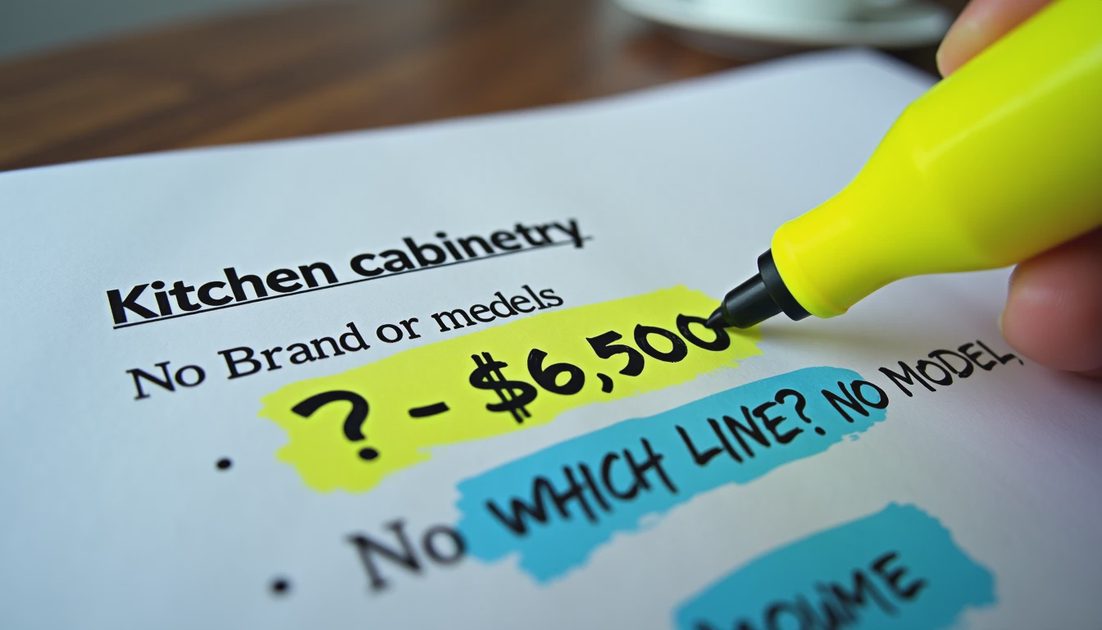
The most common red flag in a proposal is a material line that names nothing. It reads like "cabinetry, 1,200" with no brand, no model, no square footage, and no grade. That line doesn't tell you what you're buying — it tells you the contractor hasn't decided, or doesn't want you to know.
A vague material line matters because the gap between "builder's grade" and "retail grade" can be 40% or more on the same product category. On cabinets alone, the difference between a stock line and a semi-custom line can be several thousand dollars. If the proposal says "kitchen cabinets" without naming the manufacturer, the contractor can switch materials mid-job without technically changing the price — and you'll only notice when the install doesn't look like the showroom.
Here's the fix: every material line should name a brand, a model number, and a quantity. If it doesn't, ask one question: "Can you put the specific models in writing?" A contractor who can answer instantly is organized. A contractor who hesitates or says "we'll pick together later" is building room to maneuver.
Why "Allowance" Is the Most Expensive Word in the Proposal
An allowance is a placeholder price for a material you haven't chosen yet — countertops, tile, fixtures. Allowances aren't inherently wrong; every good contractor uses them. But the size of the allowance versus the reality of the market tells you a lot. A 33 per square foot installed — which, in the current Charlotte market, buys a very limited slab. When the homeowner goes to the showroom and picks something reasonable, the bill goes up.
The red flag isn't the allowance. It's the allowance that's too thin for the homeowner's stated expectations, combined with a proposal that doesn't flag it. A straight contractor will tell you in the first meeting: "your allowance buys stock-grade quartz; if you want the leathered finish, budget another $800." A proposal that stays silent on that gap is setting up a change order.
The Round-Number Total
Here's a quick tell that catches lazy estimating: real costs aren't round. A proposal full of 1,000, and $2,500 line items — or a total that lands exactly on a round thousand — usually means the contractor estimated from habit, not from measuring your house.
Real estimating produces irregular numbers: 1,240 for labor, $3,815 for material. When you see a row of clean round numbers, one of two things is happening. Either the contractor has a standard price book and applied it without visiting the specifics of your job, or they've written the proposal to match a number they had in mind. Both are risks, because both mean the price wasn't built from your actual scope.
This isn't an automatic disqualifier — some honest contractors round for readability. But it's a reason to ask: "Can you show me the takeoff?" A takeoff is the measured list of quantities — square feet of flooring, linear feet of trim, number of outlets moved. A contractor with a real takeoff will produce it happily. A contractor without one will have a hard time.
The "We'll Figure It Out" Schedule
A pre-sale renovation lives and dies by its schedule. The proposal should name a start date, a completion date, and — critically — the critical-path items that have to happen in order: demo before rough-in, rough-in before drywall, paint before flooring, flooring before final clean.
The red flag is a proposal that treats the schedule as a single line: "Estimated completion: 6-8 weeks." That tells you nothing about sequencing, nothing about what happens if a material is delayed, and nothing about whether your listing date is protected.
What a Real Pre-Sale Schedule Looks Like
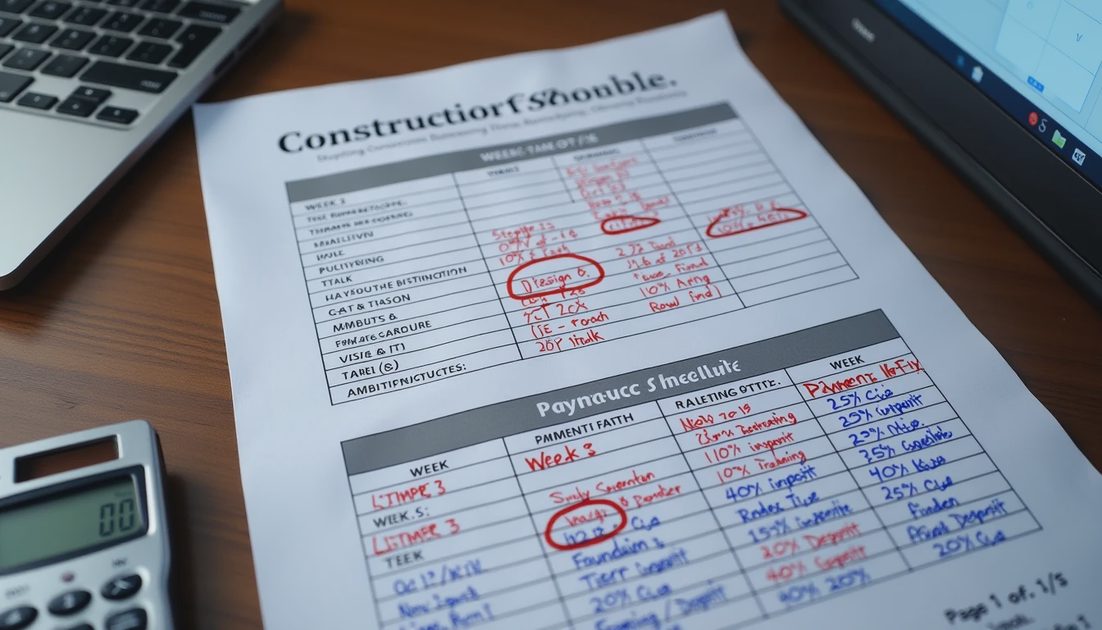
Here's a schedule table I show sellers to demonstrate what a proposal should contain — a simple version, with the critical path in order:
Week | Work Package | Key Decision Needed Before |
|---|---|---|
1 | Demo and dumpster; protect floors | Material selections |
2 | Rough-in: electrical, plumbing, HVAC moves | Fixture locations |
3 | Drywall, tape, and float | Paint colors |
4 | Cabinets and countertop install | Countertop slab confirmed |
5 | Tile, backsplash, flooring | Final tile selection |
6 | Paint, trim, doors | None — finish phase |
7 | Fixtures, hardware, final clean | All selections locked |
8 | Walkthrough and punch list | N/A |
A proposal that lays out the work in phases, names the decisions you must make by specific dates, and flags which items are on the critical path is a proposal from a contractor who runs jobs. A proposal that says "6-8 weeks" and nothing else is a proposal from a contractor who will figure out the schedule after they've got your deposit.
The Disappearing Line Item
Compare the proposal against the walkthrough you did together. If the contractor promised in person to replace the back door threshold, fix the damaged siding, or move the water heater, and the proposal doesn't include it — that's a disappearing line item. It's rarely malicious; often it's just a sloppy copy-paste from a template. But it matters because the work you were promised in conversation won't exist on paper, and at the end of the job, the paper is what gets built and billed.
The fix is a simple checklist at the end of the proposal review: walk the house with the proposal in hand, room by room, and check off every item the contractor mentioned in the meeting. Anything promised but missing gets one direct question: "This came up in our walkthrough — is it in the proposal?" The answer is either "yes, it's under this line" or the contractor adds it before you sign.
The Payment Schedule That Leans Too Far Forward
Industry norms vary by region and job size, but there are two payment structures that should always raise a question: a large deposit before work starts, and progress payments that don't track to completed milestones.
A deposit of 30% to 50% of a pre-sale job is common and reasonable when materials are being ordered up front. What's less reasonable is a schedule that asks for another large chunk before any visible work is done — say, 30% after demo. The red flag isn't the total; it's the timing. A good payment schedule ties money to completed, verifiable stages:
Deposit at contract signing — covers ordered materials
Progress payment after rough-in inspection — work is visible and inspected
Progress payment after drywall and cabinets — substantial completion
Final payment after walkthrough and punch list — you've verified the work
Any proposal that compresses those stages or asks for most of the money early deserves a direct question: "Why is the payment schedule front-loaded?" A contractor with real cash flow has an easy answer. A contractor who needs your money to run the job may not.
The Missing License and Insurance Line
In most states, a licensed contractor should be able to reference their license number on the proposal, and a certificate of insurance should be available on request. The red flag is a proposal that carries no license reference and no insurance mention at all — not necessarily because the contractor is unlicensed, but because you now have to ask for something you should never have to hunt for.
The question isn't confrontational: "Can you email the license number and the certificate of insurance before we sign?" A professional sends both within a day. The reason this matters on a pre-sale job is simple: a lien filed by an unpaid subcontractor can delay a closing. The contractor's insurance and their payment of subs are both protectors of your listing date.
How to Use This List
You don't need to be an expert to catch these — you need a checklist and the willingness to ask direct questions. Here's the summary table I hand to sellers before they review any proposal:
Red Flag | What It Means | The Question That Resolves It |
|---|---|---|
Vague material line | Room to switch materials later | "Can you put the models in writing?" |
Thin allowance | Change order in the making | "What does this allowance actually buy?" |
Round-number totals | Estimated from habit, not the job | "Can you show me the takeoff?" |
Single-line schedule | No sequencing, no date protection | "Which items are on the critical path?" |
Missing promised item | Conversation and paper don't match | "Is this in the proposal?" |
Front-loaded payments | Contractor needs your cash | "Why is payment scheduled this way?" |
No license or insurance line | You're carrying the risk | "Can you send both before we sign?" |
The goal isn't to find a flawless proposal — they don't exist. The goal is to find the red flags early, get them answered in writing, and sign only when every one of your questions is closed. A contractor who answers all seven questions cleanly and without offense is a contractor worth talking to a second time. That's how to choose a remodeling contractor before selling: not by trusting the total, but by testing the proposal. Don't renovate for applause. Renovate for the next offer.