

Last spring a couple in north Charlotte showed me a $42,000 bid for a full kitchen refresh before they listed. New cabinets, quartz everywhere, statement lighting. The house was solid, the neighborhood was average, and the kitchen was dated but functional. I asked one question: “If this were my listing next month, would I spend the money here—or would I fix the things buyers will notice in the first thirty seconds and still have budget left?”
They paused. Then they cut the scope in half—the same half I would have cut. That decision kept the project under $20,000 and still solved the dated look that was going to show up in every photo.
Harvard’s latest Leading Indicator of Remodeling Activity (LIRA), released in late October 2026, tells the same story in numbers. Annual spending on home improvements and repairs is expected to remain relatively flat through late 2027. Year-over-year growth is projected at just 1.5 percent by the third quarter of 2027. Building-product retail sales have been flat to negative. Remodeling permits have stagnated. The Center expects annual spending to hover around $525 billion through that period.
When the broader market is this cautious, every pre-sale dollar has to earn its place.

What the LIRA Numbers Actually Mean for a Seller
The Joint Center for Housing Studies data does not signal a crash. It signals a stall. Homeowners and contractors are both hesitating. Housing starts remain weak. Pending sales have been soft. In that environment, buyers walk into listings with sharper pencils and shorter patience for “nice-to-have” upgrades that do not solve real objections.
This is not the moment to renovate for applause. It is the moment to renovate for the next offer.
If you are planning to list in the next 6–18 months, the LIRA numbers should change how you rank your project list. Projects that looked “worth it” in a hotter market may now sit below the cut line. Projects that protect buyer confidence or remove obvious friction still deserve the money.
The Pre-Sale Filter I Use When the Market Softens
When overall remodeling activity slows, I run every potential project through three practical filters:
Does it remove a clear buyer objection?
Dated flooring that makes the whole house feel tired. Soft siding or missing gutters that signal deferred maintenance. A bathroom that feels unclean or cramped in the first glance. These items still move the needle.Will the average buyer in this price range actually pay for it?
A $30,000 luxury kitchen in a neighborhood where most sold homes still have original cabinets is rarely recovered. A clean, neutral, mid-range refresh often is.Can it be finished cleanly before listing without blowing the timeline?
In a slower market, long, messy projects create more risk than value. Buyers notice disruption. Agents notice incomplete work.
Here is how those filters usually sort common pre-sale ideas right now:
Project Type | Still Worth Considering? | Why / Why Not | Typical Pre-Sale Priority |
|---|---|---|---|
Full kitchen cabinet replacement | Rarely | High cost, long timeline, easy to overshoot neighborhood | Low |
Cabinet refinish / new hardware / paint | Often | Lower cost, fast visual reset | Medium-High |
Bathroom refresh (vanity, lighting, paint, fixtures) | Yes | High visual impact, contained scope | High |
New flooring (main living areas) | Yes | Buyers notice floors immediately | High |
Full siding replacement | Only if damaged | Expensive; patch and paint often enough | Medium (condition-driven) |
Exterior paint + gutter + entry cleanup | Almost always | Cheap confidence signal | High |
Statement lighting or decorative upgrades | Usually no | Applause item, not offer item | Low |
Where I Would Still Spend Money in This Climate
If this were my own listing in the next six months, here is where the first dollars would go:
Floors that look worn or mismatched. Buyers form opinions in the first thirty seconds. Clean, consistent flooring in the main living areas still ranks near the top.
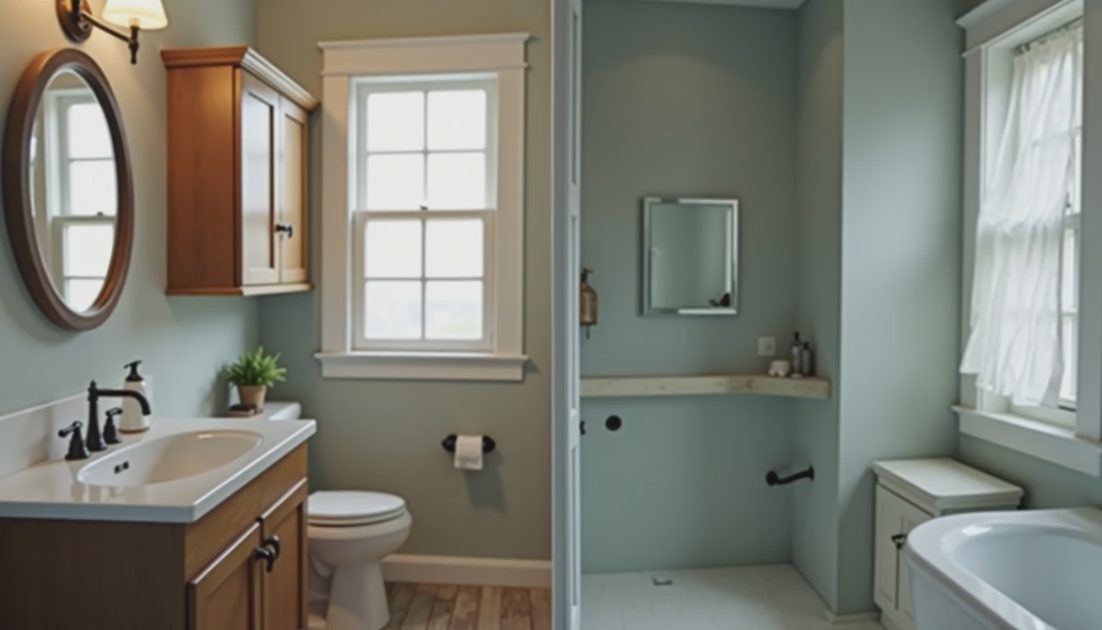
Bathrooms that feel dated or unclean. A modest vanity, new lighting, fresh paint, and updated fixtures usually deliver more perception change per dollar than a full gut.
Exterior signals of care. Soft siding patches, clean gutters, a fresh front door, and basic landscaping cleanup tell buyers the house has been maintained. (When siding damage starts costing buyer confidence, the fix is usually smaller than a full replacement.)
Obvious functional problems. Leaky fixtures, broken hardware, stained ceilings, or aging systems that will show up on inspection. These are negotiation liabilities, not style choices.
Everything else goes on the “maybe later / credit the buyer” list until the core confidence items are handled.
What to Cut or Postpone
In a flat remodeling market, the projects that most often fail the ROI test are the ones sellers get talked into because they look impressive on a bid.
In mid-range north Charlotte neighborhoods, a full kitchen cabinet replacement typically recovers only about 50–60 percent of cost at resale. A cabinet refinish plus new hardware and paint can deliver most of the visual improvement at roughly one-third the cost. That math is hard to ignore when overall remodeling spending is stalling.
Other common cuts right now:
Full kitchen gut-and-replace when a refinish and hardware change would solve the dated look (see our guide on whether to reface, paint, or replace cabinets before selling)
Luxury finishes that exceed the neighborhood
Secondary bathrooms treated like primary suites
Decorative or “dream home” items that do not address a buyer objection
If a contractor’s proposal keeps expanding the scope, ask one clarifying question: “Which of these line items will actually help this house sell faster or stronger in the current market—and which are just nicer?” (That is the same question I use when comparing three different remodeling bids.)
A Simple Decision Sequence for the Next 30 Days
You do not need a full redesign. You need a ranked list.
Walk the house the way a buyer will—front door, main living areas, kitchen, primary bath, then secondary spaces.
Note every item that creates hesitation or suggests deferred maintenance.
Price the high-impact, contained fixes first (floors, baths, exterior confidence items).
Run the remaining ideas through the three filters above.
Set a firm budget ceiling and refuse to let scope creep fill it.
Harvard’s LIRA numbers do not say “stop all remodeling.” They say the era of easy, broad renovation spending has paused. In that environment, the sellers who do best are the ones who spend less overall—but spend it in the places that still move offers.
If you are preparing to list, this is a good week to pull out the project list, cross off the applause items, and put the money where buyer confidence actually lives.
Signature: Don’t renovate for applause. Renovate for the next offer.
— Ryan Caldwell